

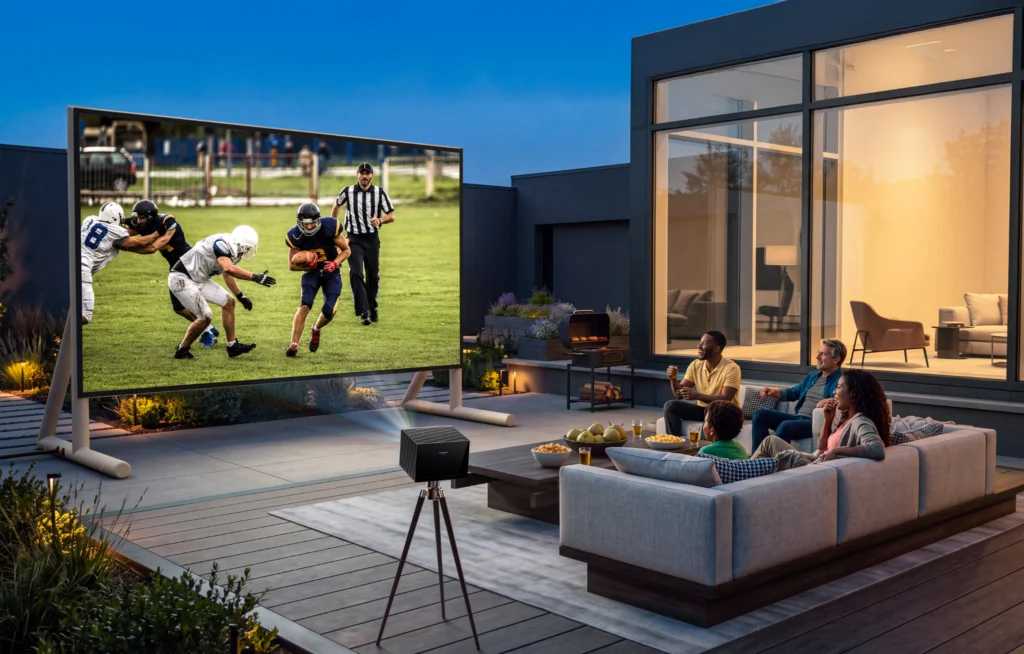
The invitations are out. You’ve picked a movie everyone can agree on, stocked the cooler, and arranged a few blankets on the lawn. By all appearances, your backyard movie night is ready.
Then the sun starts setting.
The projector picture is barely visible. Someone realizes the extension cord won’t reach the patio. A breeze turns the screen into a sail, and the neighbor’s porch light suddenly becomes a very noticeable part of your evening.
None of these problems is particularly difficult to solve. The trouble is that most people don’t discover them until their guests are already arriving.
A memorable outdoor movie night has surprisingly little to do with elaborate decorations or expensive equipment. It’s about getting a handful of practical details right before the opening credits roll.
Here’s what deserves a place on your checklist.
1. Sunset Isn’t Necessarily Showtime
One of the easiest mistakes is scheduling an outdoor movie to begin at sunset.
Unfortunately, sunset doesn’t mean darkness.
Even after the sun drops below the horizon, the remaining twilight can make a projected image look pale and washed out. Bright scenes might be watchable, but darker scenes can lose their contrast almost entirely.
For most backyard setups, plan to begin roughly 30–60 minutes after sunset, adjusting for your location, season, equipment, and surrounding light.
In northern states during the summer, useful darkness may arrive later than expected. In the fall, you may have a much earlier viewing window.
Rather than inviting everyone to sit down immediately, use twilight as part of the gathering.
Let guests arrive while there’s still daylight. Serve food, catch up, and give children time to play outside. By the time the sky is dark enough for the movie, everyone will already be settled.
A simple schedule might look like this:
| Time | What’s Happening |
| 90 minutes before sunset | Finish equipment setup and test the connections |
| 45 minutes before sunset | Guests arrive; serve snacks and drinks |
| At sunset | Make final seating and lighting adjustments |
| 30–60 minutes after sunset | Start the movie when the picture is clearly visible |
| After the movie | Turn on pathway lighting and pack away sensitive equipment |
Tip: Check the sunset time for your actual ZIP code rather than relying on a general seasonal estimate. A late-June movie night in Seattle will have a very different schedule from one in Atlanta.
2. The Best Screen Location Isn’t Always the Prettiest
That open stretch of lawn beside your flower beds may look perfect for an outdoor theater.
But before setting up the screen, ask a few less glamorous questions.
Where will the projector go? Does everyone have a clear view? Is there a power outlet nearby? And most importantly, what happens when the wind picks up?
A good screen location should offer:
- A clear projection path: No people, tree branches, or patio furniture interrupting the beam.
- Reasonable wind protection: Avoid completely exposed areas where gusts can catch a large screen.
- Enough seating distance: Guests should see the entire picture comfortably without craning their necks.
- Minimal unwanted light: Porch fixtures and landscape lighting shouldn’t shine directly onto the viewing surface.
Pay particular attention to the direction of the screen.
A bright security light behind the audience may be less disruptive than a smaller fixture shining straight onto the image.
Screen size deserves some restraint, too. A 150-inch picture can sound spectacular, but it may be unnecessarily large for six people sitting in a modest backyard.
For smaller gatherings, a 100- or 120-inch image may provide a more practical balance between visibility, available space, and brightness.
Don’t Let the Screen Become a Sail
An outdoor movie screen can be an excellent alternative to projecting onto a garage door or hanging a bedsheet, particularly when you want a smooth surface and a predictable image shape.
Portable frames, folding screens, and inflatable designs offer different installation options. However, each needs to be secured according to its manufacturer’s instructions.
Use the specified anchors, weights, or tie-downs, and check the screen’s wind limitations.
If conditions become gusty or the screen starts moving significantly, stop the screening and take it down. A large screen isn’t worth the risk of falling equipment or damaged property.
3. Measure the Projector Distance Before Moving the Furniture
Here’s an oddly common backyard movie night problem: the projector works perfectly, but the picture is either too small or far too large.
That happens because projectors have different throw ratios, which determine how much distance they need to create a particular image size.
For example, a projector with a 1.2:1 throw ratio needs approximately 10.5 feet of lens-to-screen distance to produce a 120-inch, 16:9 image, subject to its actual installation specifications.
A projector with a longer throw ratio requires more distance for the same screen size.
If you’re using a 4K projector for outdoor movie nights, consider not only resolution and brightness but also its optical zoom range and the distance available in your yard.
Some models offer flexible optical adjustments that make placement easier, while others need a more specific position.
Before your guests arrive:
- Set the projector on a sturdy, level surface.
- Display a test image at your planned screen size.
- Adjust the physical position and optical settings before relying on digital keystone correction.
- Check sharpness across the image, including the corners.
- Make sure nobody will need to walk through the projection path.
Don’t place the projector on a lightweight folding table where guests might bump it while reaching for snacks.
And remember that most home theater projectors aren’t designed to withstand rain, dew, or other outdoor moisture. Keep the equipment dry, well ventilated, and within its specified operating conditions.
4. Your Wi-Fi May Not Reach the Lawn
Inside the house, streaming movies is effortless. Outside, the connection may be less reliable than expected.
A router that works beautifully in the living room might struggle to deliver consistent video through exterior walls and across the backyard.
You don’t want to discover that halfway through a movie.
Test your streaming connection at the actual projector location, not while standing near the back door.
If possible, use a wired internet connection for a permanent patio entertainment area. Otherwise, make sure your Wi-Fi signal is strong enough to handle the movie’s streaming quality.
Another useful precaution is downloading your movie in advance when your streaming service and playback device permit offline viewing. Check that the downloaded title will actually play through your intended video-output connection.
Also consider how the audio will connect.
Bluetooth speakers are convenient, but some combinations introduce noticeable sound delay. Lip-sync problems become particularly distracting during dialogue-heavy scenes.
A wired audio connection or a properly configured low-latency wireless system may be more reliable.
Run a complete five-minute test with the same movie, streaming device, and speakers you’ll use that evening. A menu screen alone won’t reveal every playback problem.
5. Outdoor Sound Travels Further Than You Think
Without walls to contain it, sound behaves differently outdoors.
Voices may seem quieter from the back row, while bass can carry farther than expected. Turning up the volume isn’t always the best solution.
Start by directing the speakers toward the seating area. Avoid aiming them at neighboring homes or across open property lines.
For larger backyards, distributing sound more evenly can work better than placing one loud speaker beside the projector.
If you’re hosting in a neighborhood with closely spaced houses, think about when the movie will end.
A two-and-a-half-hour film starting at 9:30 p.m. may keep the neighborhood listening well past midnight.
Check local quiet hours or HOA rules when applicable. It’s also considerate to let nearby neighbors know you’re planning a gathering, especially if you’ll have a larger group.
For a public or widely advertised community screening, check whether you need permission to show the film. Ordinary home viewing and public performances can have different licensing requirements.
Movie night is supposed to bring people together—not start a neighborhood dispute.
6. Make the Ground More Comfortable Than It Looks
A neatly trimmed lawn can seem like the perfect place to spread out blankets.
Thirty minutes into the movie, however, people may be shifting around because the ground is damp, uneven, or colder than expected.
Consider a mix of seating options rather than assuming everyone will enjoy sitting on the grass.
Low outdoor chairs, cushioned patio furniture, and weather-resistant floor cushions are useful additions.
For guests sitting close to the ground, provide a waterproof picnic blanket or outdoor rug underneath softer blankets.
You can also borrow a few ideas from an indoor living room:
- Keep a small table or stable tray within reach of each seating group.
- Provide extra throws for cool evenings.
- Leave clear paths to the bathroom and food station.
- Position trash and recycling bins away from the main viewing area.
- Offer chairs with back support for anyone who finds floor seating uncomfortable.
Don’t forget the temperature after dark.
Even a warm day can turn chilly once the sun disappears. Check the evening forecast, including temperature, wind, and the chance of rain.
For summer gatherings, consider fans or other appropriate mosquito-control measures. Remove standing water around the yard beforehand, and keep any insect repellents away from food.
A little preparation goes a long way toward keeping everyone focused on the movie rather than their discomfort.
7. Keep Food Simple and Away From the Equipment
An outdoor movie night doesn’t need an elaborate menu.
In fact, food that’s difficult to eat in the dark is usually more trouble than it’s worth.
Choose snacks that people can serve themselves without juggling multiple utensils or balancing full dinner plates on their knees.
| Good Movie Night Options | Why They Work |
| Individual popcorn containers | Easy to carry and portion |
| Pretzels and packaged snacks | Minimal preparation and cleanup |
| Fruit cups | Refreshing and simple to serve |
| Sliders or small sandwiches | Filling without requiring a formal meal |
| Cookies or brownies | Easy dessert with little mess |
Set up the food station away from the projector and screen. Greasy fingers, spilled drinks, and expensive electronics aren’t a great combination.
Use a cooler for drinks and perishable items that need refrigeration, and keep hot foods at safe serving temperatures.
As the movie approaches, switch from food preparation to self-service.
The host should be able to watch the movie, too.
8. Don’t Improvise With Outdoor Electricity
Power arrangements deserve more attention than they usually receive.
Projectors, streaming devices, and speakers may all need electricity. Depending on your setup, the closest outlet could be on the other side of the patio.
Avoid the temptation to connect several random extension cords just to reach the equipment.
Use an appropriately rated, outdoor-use extension cord and a GFCI-protected power source. Check cords for damage, keep connections dry and away from wet ground, and route cables away from walking paths.
Never run cords beneath rugs or improvise permanent outdoor wiring.
If an outlet isn’t conveniently located, consider having a qualified electrician install one rather than creating a recurring trip hazard.
Rain or the risk of moisture reaching electrical equipment is a reason to stop, not a problem to solve with a makeshift plastic covering.
If bad weather threatens, moving the gathering indoors is the better plan.
The Final 15-Minute Walkthrough
Before everyone takes their seats, do one last pass through the backyard.
- The picture is focused and properly aligned.
- The screen is secure, with no concerning wind movement.
- The projector is stable, dry, and properly ventilated.
- The movie plays smoothly with synchronized audio.
- Cables are safe and kept away from walkways.
- Seating offers a clear view for every guest.
- Porch and landscape lights aren’t washing out the image.
- Snacks, drinks, blankets, and trash bins are accessible.
- The weather forecast still supports an outdoor screening.
- There’s a practical plan for bringing everything inside afterward.
If all ten boxes are checked, you’re in good shape.
Put the remote somewhere easy to find, lower the lights, and enjoy the evening.
The Part Everyone Will Remember
Nobody comes away from a great backyard movie night talking about how perfectly you arranged the extension cords.
They remember laughing with friends under the stars, watching a familiar movie feel new again, or seeing the kids fall asleep beneath a pile of blankets before the credits.
That’s what makes the preparation worthwhile.
A little attention to timing, placement, sound, and comfort can prevent the small frustrations that interrupt an otherwise wonderful evening.
Get those details handled before sunset, and you’ll have much more time to enjoy what you planned the whole night for: a good movie and even better company.