

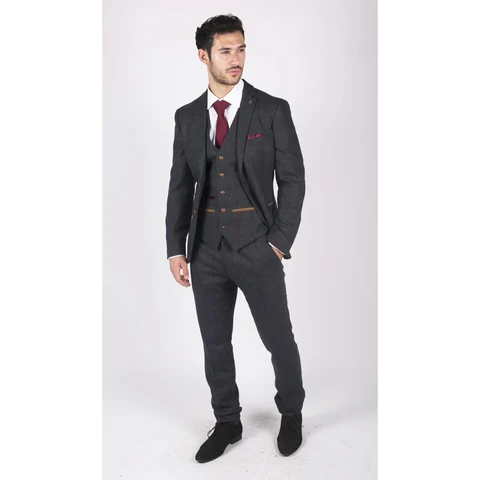
A navy blue wedding suit gives a groom plenty of styling choices, but the strongest starting point is the wedding itself. Decide how formal the day will be and how you want to differ from the wedding party. Then choose the suit cloth and waistcoat before adding smaller details.
You can keep the outfit traditional with a matching three-piece suit or use a contrasting waistcoat to make the groom’s outfit distinct. Navy works with several wedding palettes, so there is no need to force every accessory into the same shade as the flowers or bridesmaids’ dresses.
Confirm The Dress Code Before Choosing the Suit
For a wedding where lounge suits are appropriate, navy tailoring can work in a city venue, a country house or a relaxed registry-office setting. The fabric and accessories determine much of its character. A plain cloth looks different from a large check even when both are described as navy.
If you are planning a black-tie wedding, choose a dinner suit that meets that dress code. An ordinary navy business or wedding suit does not become black tie simply because you wear a bow tie. Set the level of formality early so the groomsmen can dress consistently.
Consider the schedule as well. A ceremony followed by photographs outdoors and a long reception means you will wear the outfit in different temperatures and lighting. Ask to see the cloth in daylight and choose a fit that remains comfortable when seated through the meal.
Give The Groom One Clear Point of Difference
If the wedding party will all wear navy, decide what will distinguish your outfit before buying accessories. You might choose a contrasting waistcoat, a different tie or a more individual buttonhole. One clear difference is often enough to make the arrangement look deliberate.
Navy blue wedding suit choices at TruClothing include plain and checked designs, with matching and contrasting waistcoat options across the range. Comparing the complete outfits can help you decide whether the waistcoat should be the main detail or whether you would prefer a quieter suit with individual accessories.
Avoid assuming that two garments labelled navy will match. The colour can lean towards ink blue, a brighter blue or a softer grey blue. If a matching outfit is the plan, choose pieces intended to belong together and check them side by side before alterations.
Choose A Waistcoat That Suits the Cloth
A matching waistcoat keeps the suit visually continuous. It is useful if you want a straightforward formal outfit and expect to take the jacket off during the reception. The same cloth across all three pieces also leaves more freedom for a patterned tie.
A cream or pale neutral waistcoat gives stronger contrast against navy. Check that its undertone works with the shirt and other pale fabrics in the wedding party. Bring a swatch if colour coordination is important, because product photographs and phone screens can make similar shades look identical.
The fit needs attention regardless of colour. The waistcoat should meet the trousers and lie comfortably across the chest. Try it while sitting and bending slightly forward. A groom’s outfit needs to work while signing the register, greeting guests and eating, as well as during posed photographs.
Select The Shirt and Tie Together
Begin by trying a plain white shirt, then assess any softer alternatives against the actual suit. White gives a clear contrast with navy. A pale blue shirt produces a more tonal effect, while an ivory shirt should be considered alongside the other whites and creams used in the wedding.
Choose the tie knot for the collar opening and your proportions. A very large knot can crowd a narrow collar or sit awkwardly above a high waistcoat. Practise tying it in advance rather than learning with a photographer waiting nearby.
With a checked suit, a plain tie makes the pattern easier to read. For a plain suit, a restrained floral or woven texture can add interest. If the tie carries the wedding colour, the pocket square can remain white or use a small related detail rather than repeating the full pattern.
Plan The Buttonhole and Shoes Before the Fitting
Discuss the buttonhole with the florist and show them the suit lapel. Its size and attachment need to work with the jacket. A large arrangement can obscure a narrow lapel or pull it out of shape, so assess the proportion before the morning of the wedding.
Take the intended shoes to the final trouser fitting. Black gives navy a more formal finish, while dark brown can suit a less formal daytime celebration. Choose the shape and colour alongside the venue and the rest of the outfit rather than treating shoes as an afterthought.
Wear them briefly beforehand if they are new, following any care guidance. Check that the socks remain comfortable and cover the ankle when seated. These are small decisions, but they are easier to resolve during preparation than halfway through the reception.
Rehearse The Complete Outfit
Put the whole outfit on before the wedding week, including shirt, shoes and accessories. Empty your pockets and work out where your phone, vows or other essentials will go. A bulky phone in a close jacket pocket can change the outline you have spent time getting right.
Take a standing and seated photograph, then check that you can fasten, unfasten and remove the jacket comfortably. Keep the outfit on proper hangers afterwards and follow its care instructions. By the wedding morning, every part should already have been worn together and checked.