

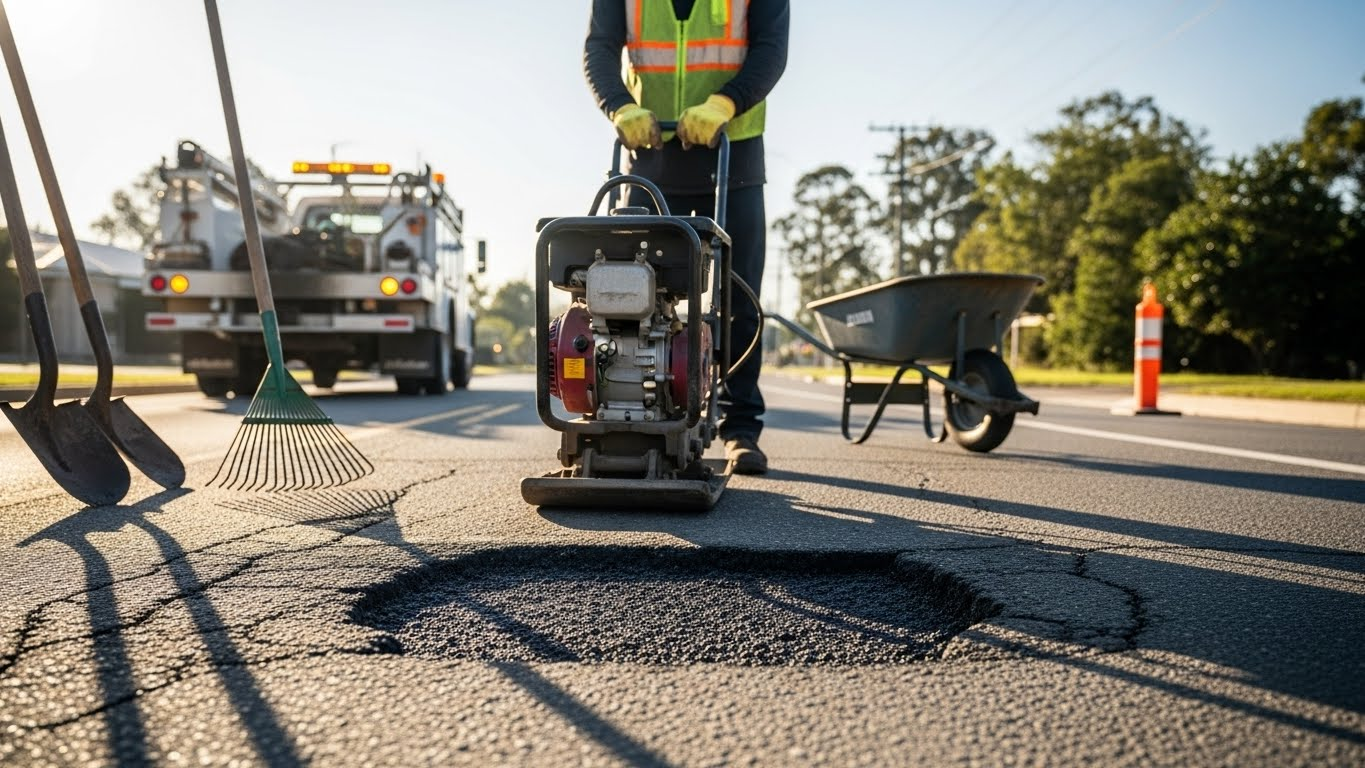
Across UK roads and driveways, potholes appear quickly once water and traffic penetrate the surface. Left untreated, they widen, deepen, and cause damage to vehicles, often resulting in unexpectedly high repair bills.
Even small cracks, if ignored, can lead to major structural failures, especially on driveways or busy roads. With decades of experience in surfacing and tarmac installation, we’ve witnessed how poor patching or rushed repairs often backfire, increasing long-term costs.
This article goes beyond basic pricing, showing you the true factors behind pothole repair costs in the UK, why machine lay tarmac is often the most cost-effective solution, and how to plan jobs efficiently to minimize waste and prevent repeated repairs.
Pothole Repair Costs in the UK – Core Cost Drivers
Understanding true pothole repair cost starts with separating material, labour, and process costs. At the core is tarmac, the bituminous mix that binds aggregates into road‑worthy surfacing. But job price isn’t just tarmac litres, it includes how it’s installed and how much prep is needed.
First, recognise that size and depth matter. A tiny surface pothole invites a quick patch, while deep or wide holes often require machine lay tarmac and base reconstruction. Labour costs vary by region; inner London rates are often higher than rural counties.
Here are the biggest cost contributors:
- Material Grade: Standard tarmac vs polymer‑enhanced mixes.
- Site Preparation: Milling old surface, removing debris, and correcting base failures.
- Machinery: Rollers and planers required for high‑quality installs.
- Labour Skill: Experienced crews guarantee better compaction and longevity.
- Access & Traffic Control: Restricted sites cost more to manage safely.
Cost differences are stark: manual patching can feel cheaper upfront but fails quicker. Machine lay tarmac, though costlier per square metre, creates stronger adhesion and fewer return jobs.
Here’s a quick cost snapshot for UK pothole repair:
| Repair Type | Typical UK Cost (£ per m²) | Notes |
| Small hand patch | 50 — 150 | Cheapest, short life |
| Machine lay tarmac | 80 — 200 | Best long‑term value |
| Full surface renewal | 120 — 300 | For widespread deterioration |
| Site prep / milling | 30 — 80 | Often required |
Expert insight: Always ask for a materials breakdown and clarification on whether prices include site prep and waste removal – these often catch people by surprise.
Tarmac & Material Costs – What You Really Pay For?
When a contractor quotes for pothole repair, the single biggest variable is the tarmac mix used. Basic hot rolled tarmac is sufficient for small, dry sites, but in the UK’s wet climate, polymer‑modified or low‑temperature mixes resist cracking and water damage far better.
Material costs hinge on:
- Aggregate quality determines strength under load.
- Binder type: More expensive binders resist moisture and temperature swings.
- Additives, fibres or polymers improve flexibility and reduce future cracking.
Distance from the plant matters too. Longer haulage → higher cost per tonne delivered. Now, combine the material with the installation technique:
- Hand patching uses loose material tamped by hand tools.
- Machine lay tarmac uses heated delivery and compacting rollers for uniform density and bonding.
Machine lay tarmac boosts surface integrity because:
- Heat keeps binders active longer.
- Rollers compress every particle into place.
- Uniform layers eliminate weak spots.
This means the surfacing cost today saves future costs tomorrow – fewer gaps for water infiltration and less resealing frequency. Here’s a material cost table showing typical composition impact:
| Component | Purpose | Cost Impact |
| Base tarmac mix | Structural fill | Medium |
| Polymer additives | Flexibility & crack resistance | High |
| Binder quality | Moisture protection | High |
| Aggregate size | Load distribution | Low to Medium |
In summary, don’t take the lowest material cost at face value. Always ask what tarmac grade and installation method are included in the quote.
Machine Lay Tarmac vs Patchwork – The Better Path
Many DIYers and budget clients prefer hand patching because it feels cheaper upfront. But here’s the truth: hand patching fills a hole superficially. It doesn’t fix the base failure beneath. So water returns, and the hole often returns faster than expected.
In contrast, machine lay tarmac:
- Heats and places tarmac evenly.
- Densifies with heavy rollers.
- Bonds deeply into existing surface edges.
This method delivers a uniform surface profile with fewer weak points.
It’s especially crucial if:
- The hole is deep.
- Adjacent surfaces are cracked.
- Traffic loads are heavy.
Here’s the real difference in lifecycle:
| Method | Initial Cost | Lifespan | Rework Frequency |
| Hand patch | Low | Short | High |
| Machine lay | Moderate | Long | Low |
| Full resurfacing | High | Very long | Very low |
With machine lay, you pay more on day one but save on long‑term maintenance, fewer revisits, less future surfacing cost.
Also consider that machine lay crews bring:
- Certified operators.
- Calibrated equipment.
- Precise finishing.
- Minimised waste.
This doesn’t happen with quick patch fixes. For larger driveway areas or roads with multiple potholes, machine lay tarmac is usually the most cost‑efficient approach overall.
Expert Steps to Smart Repair Planning
Follow these expert-tested steps to plan pothole repairs efficiently, reduce unnecessary costs, and ensure long-lasting results. With careful inspection, smart scheduling, and proper tarmac use, your surface stays durable, smooth, and problem-free for years.
Step 1: Book a professional survey
A trained inspector can identify base instability, drainage issues, and hidden damage invisible to the untrained eye. Surveying early prevents unexpected costs and ensures the right repair method is chosen from the start.
Step 2: Assess the damage severity
Not all cracks are equal. Small surface cracks may only need sealing, while deep or wide potholes require machine lay tarmac and base preparation. Early intervention can save hundreds of pounds in long-term repairs.
Step 3: Compare detailed quotes
Don’t settle for a single estimate. Ask for a breakdown per m², including tarmac grade, machinery, labour, and waste disposal. Transparent quotes help you identify value versus cheap short-term fixes.
Step 4: Schedule repairs for dry conditions
Weather affects tarmac curing. Wet or cold conditions can slow work, increase labour days, and reduce surface longevity. Plan repairs during dry, warmer periods to optimize cost and quality.
Step 5: Choose machine lay tarmac for serious repairs
Machine lay ensures dense, uniform compaction, reducing the risk of recurring potholes. Though initial costs are higher, this approach lowers long-term surfacing costs and extends surface life.
Step 6: Conduct seasonal checks
Inspect your repaired surface periodically. Quick reseals or crack fills at the first signs of damage prevent major resurfacing costs in the future.
Following these steps gives clarity over costs, reduces surprise expenses, and ensures your driveway or road remains durable, safe, and smooth for years.
Frequently Asked Questions (Elaborated)
How long do pothole repairs last in the UK?
The lifespan of a pothole repair depends heavily on the method used, the base condition, and environmental factors. Hand patching is a temporary fix and may last only a few months, particularly in wet or heavily trafficked areas.
Machine lay tarmac, combined with proper home improvement base preparation and drainage, can last 5–10 years or more, even under frequent use. Regular inspections and minor maintenance further extend its life.
When is the best time of year for repairs?
The ideal repair period in the UK is late spring through early autumn, when the weather is warmer and drier. Tarmac sets more reliably in these conditions, reducing the risk of water damage, poor adhesion, or delays.
Repairs in winter or rainy periods often require longer curing, higher labour costs, and may shorten the repair lifespan.
Do repair prices change by UK region?
Yes, prices vary based on labour rates, accessibility, and traffic management requirements. Urban areas like London or Manchester generally charge more due to higher labour costs and additional planning for restricted spaces. Rural areas may be cheaper, but can incur delivery charges for tarmac and machinery.
What’s the ideal tarmac thickness for driveway repairs?
For standard UK driveways, 40–50 mm of compacted tarmac is typically sufficient. Heavier vehicles, high-traffic areas, or weak subsurfaces require deeper base layers and thicker machine lay tarmac to prevent cracks and potholes. Proper thickness ensures long-term durability and fewer future repairs.
Secure Your Driveway with Expert Repairs
Potholes may seem small at first, but ignoring them can escalate costs and damage vehicles or driveways over time. Understanding the true drivers of pothole repair costs in the UK, from tarmac quality and machine lay methods to site prep and drainage, empowers you to make informed decisions.
By following expert steps, professional surveys, assessing damage, comparing detailed quotes, and scheduling repairs wisely, you can avoid recurring repairs and long-term expenses. Investing in machine lay tarmac and quality materials ensures a durable, smooth surface that lasts for years.Act smart today: plan, repair, and protect your driveway before small cracks turn into costly potholes.