

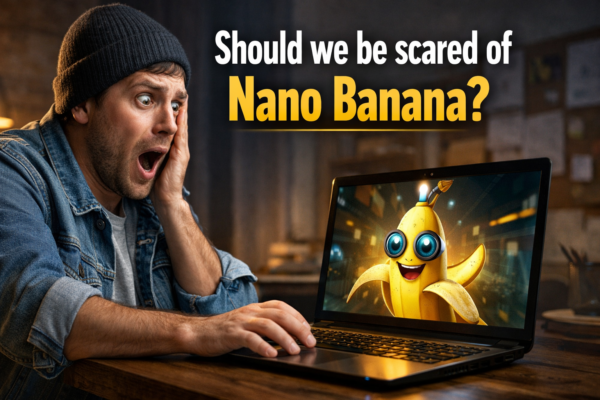
AI didn’t arrive with a single announcement or a dramatic unveiling. It slipped in quietly—first as an assistant, then as a collaborator, and now as something closer to infrastructure. Tools like Nano Banana 2 and Mixboard sit right in the middle of that transition, which is why they tend to spark mixed reactions. On one hand, they make creative work faster and more flexible. On the other, they raise uncomfortable questions about authenticity, likeness, and how far automation should go. The tension isn’t new, but it’s becoming harder to ignore as AI-generated content blends seamlessly into everyday media.
Table of Contents
- Nano Banana 2 and the Unease Around Visual AI
- Mixboard as a Thinking Space, Not a Shortcut
- AI Figures and Why Likeness Fears Keep Coming Up
- Mixboard AI and the Ethics of Decision-Making
- Nano Banana AI and Why Deepfakes Aren’t the Whole Story
- Google Mixboard and the Shift Toward Integration
- AI Figure as a Sign of Where This Is Going
Nano Banana 2 and the Unease Around Visual AI
Nano Banana Pro tends to attract attention because of how polished its output can be. Images and videos created with Nano Banana 2 don’t look experimental—they look finished. That’s where the unease starts. When visuals reach that level of realism, people naturally worry about deepfakes, misused likenesses, or the erosion of trust in what they see online.
But it’s worth separating capability from intent. Nano Banana 2 isn’t designed to impersonate real people or harvest identities. It works within controlled inputs, whether that’s stylized characters, abstract visuals, or intentionally fictional figures. The anxiety comes from imagining worst-case scenarios, not from how most creators actually use the tool. In practice, Nano Banana 2 is more often used to visualize ideas that would otherwise never leave a rough draft.
Mixboard as a Thinking Space, Not a Shortcut
Mixboard doesn’t generate fear in the same way, but it often gets misunderstood. People hear “AI concepting board” and assume automation is replacing thinking. Mixboard works in the opposite direction. It’s a space to organize ideas, test directions, and explore alternatives before committing to a final output.
What Mixboard does well is slow things down at the right moment. Instead of jumping straight into production, creators can map out tone, structure, and intent. That matters when working with AI-generated visuals, because the danger isn’t speed—it’s losing clarity. Mixboard AI doesn’t decide what’s good. It helps people see what they’re already circling around.
AI Figures and Why Likeness Fears Keep Coming Up
The rise of AI Figures has intensified debates around identity. When an AI Figure looks believable, people worry about stolen faces or unauthorized use of real features. That concern isn’t baseless, but it often misses how AI Figures are actually deployed.
Most AI Figures are composites. They’re built from prompts, styles, and intentional abstraction. They don’t belong to a real person in the way a photograph does. In many cases, they function more like mascots or avatars—recognizable without being referential. The fear isn’t really about AI Figures themselves; it’s about losing the ability to tell what’s real. That’s a media literacy problem, not a tool problem.
Mixboard AI and the Ethics of Decision-Making
One of the quieter advantages of Mixboard AI is that it keeps humans in the decision loop. Instead of handing over a neat, ready-made answer, it shows the different paths you could take. That small difference changes a lot. When options stay visible, creators are more aware of what they’re choosing—and why.
Mixboard AI leans toward helping people think things through, not rushing them to the finish line. By placing ideas next to each other, it forces a moment of pause. That’s especially valuable when the work will be seen by others or deals with sensitive visuals, where intention matters just as much as execution. The tool doesn’t remove accountability—it makes it harder to accidentally bypass it.
Nano Banana AI and Why Deepfakes Aren’t the Whole Story
Deepfakes dominate headlines, but they’re a narrow slice of what Nano Banana AI and motion control AI actually enables. Most usage is far less dramatic and far more practical. Creators use Nano Banana AI to maintain consistency across visuals, generate variations without starting over, or adapt content for different formats.
This is where the fear narrative starts to unravel. Nano Banana AI doesn’t inherently deceive—it standardizes. It helps creators keep characters stable, lighting coherent, and motion predictable. Those are production problems, not ethical ones. When misuse happens, it’s almost always tied to intent, not capability.
Google Mixboard and the Shift Toward Integration
The association with Google Mixboard signals something important: AI tools are becoming less experimental and more infrastructural. When tools integrate smoothly into existing workflows, they stop feeling like disruptions and start feeling like utilities.
Google Mixboard represents that shift. It doesn’t ask users to abandon how they work—it fits around it. That kind of integration tends to reduce misuse, not increase it, because it normalizes responsible use. When tools feel familiar, people are more likely to use them thoughtfully instead of pushing boundaries just to see what breaks.
AI Figure as a Sign of Where This Is Going
So is AI going too far? The presence of an AI Figure in a presentation, video, or campaign might feel unsettling now, but history suggests that discomfort fades once norms form. Photography faced the same suspicion. So did digital editing. Each time, the industry adapted instead of collapsing.
What tools like Nano Banana 2 and Mixboard show is that AI isn’t replacing creativity—it’s redistributing effort.
People are still the ones making the calls. They decide what feels right, what crosses a line, and what gets left on the cutting room floor. All AI really does is make it easier to test ideas without paying such a high price for getting it wrong. That nuance tends to get lost in fear-driven conversations. Progress doesn’t wipe out standards—it reshapes them. The industry isn’t heading for collapse; it’s adjusting. And tools that support reflection, iteration, and human judgment are far more likely to help things settle into place than send them off the rails.
In that sense, AI isn’t going too far. It’s going exactly as far as people let it—no more, no less.