

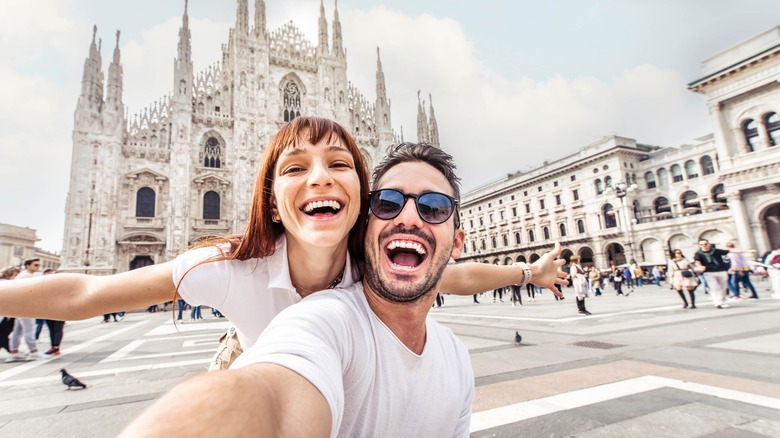
The Magnetism of the “Must-See”
Before dismissing the tourist trail entirely, it is helpful to understand why these places draw us in. The Acropolis in Athens or the Great Wall of China aren’t just photo backdrops; they are tangible links to human history. They represent the pinnacle of artistic achievement or the raw power of nature. Feeling a pull toward these landmarks is natural.
The disappointment usually arises when the experience of the place fails to match the magnitude of the place. When you are worried about pickpockets or rushing to get back to a tour bus, you cannot absorb the atmosphere. You stop looking at the details—the way the light hits the stone, the sound of the wind, the smell of the air.
To experience a famous place personally, you must first acknowledge that the crowds are there for the same reason you are. You cannot control the number of people, but you can control your reaction to them and, more importantly, how you navigate around them to find your own slice of silence.
Mastering the Art of Timing
The single most effective tool in a traveler’s arsenal is the alarm clock. Most mass tourism operates on a convenient schedule: breakfast at 8:00 AM, arrival at the site by 9:30 AM. By 10:00 AM, the buses have unloaded, and the magic is diluted.
The Golden Hours
Arriving at a landmark at dawn changes everything. The light is softer, the air is cooler, and the crowds are nonexistent. Watching the sunrise over Angkor Wat or walking across the Charles Bridge in Prague before the city wakes up offers a level of intimacy that is impossible to replicate at noon. If mornings aren’t your strength, late evenings often work similarly. As day-trippers retreat to their hotels or cruise ships, cities often sigh with relief and return to their locals.
Embracing the “Off” Season
If your schedule allows, travel during the shoulder season (the period between peak and off-peak). Venice in November may be damp, but it is also hauntingly beautiful and devoid of the summer crush. Kyoto in mid-winter offers a stark, quiet beauty that the cherry blossom season lacks. Bad weather often scares away the casual tourist, leaving the dedicated traveler with a much more private viewing. Rain can clear a piazza faster than any police barrier, giving you a solitary moment in a space usually packed with thousands.
Breaking the Tourist Bubble
A personalized travel experience rarely happens inside a tour bus or a hotel chain. To feel the pulse of a place, you need to engage with the people who live there. This doesn’t require fluency in the local language, but it does require curiosity and humility.
Start by moving your base of operations. Instead of staying in the city center near the main attractions, rent an apartment or book a hotel in a residential neighborhood. This forces you to commute like a local, shop at local grocers, and see the rhythm of daily life.
When dining, avoid restaurants with “tourist menus” translated into five languages. If a host is standing outside trying to usher you in, keep walking. Look for places where the menus are handwritten or where you see locals eating. Ask the staff for their recommendations, not just on food, but on where they go to relax. A bartender or a shopkeeper can often direct you to a viewpoint or a park that isn’t in the guidebooks, simply because they live their lives in the margins of the tourist map.
The Joy of the Detour
While the main attraction is the draw, the most memorable moments often happen five blocks away. Most tourists cluster tightly around the specific point of interest. If you walk just ten minutes in any direction away from the epicenter, the crowds dissipate, but the atmosphere remains.
This strategy applies to nature as well. For example, when researching things to do in Yellowstone, you will find that Old Faithful is the headline act. However, a park ranger might tell you that a hike through the Lamar Valley at dusk offers better wildlife viewing and a profound sense of solitude that the geyser basin lacks. Similarly, instead of fighting for space at the Trevi Fountain, seek out the smaller, unsuspecting fountains tucked into Roman courtyards.
The goal is to find the “sister sites.” If the Louvre is overwhelmed, the Musée de l’Orangerie offers Monet’s masterpieces in a serene, naturally lit setting. If the wait for the Empire State Building is too long, the view from Top of the Rock or a rooftop bar in Brooklyn might offer a better perspective—one that actually includes the Empire State Building in the skyline.
Curating Your Own Context
Standard group tours are designed for efficiency and broad appeal. They feed you dates and names, but they rarely offer nuance. To make a trip personal, you need to align the experience with your specific interests.
Instead of the generic “City Highlights” tour, look for niche experiences led by experts.
- Historian-led walks: If you love history, find a tour led by an archaeologist who can explain the political scandals of Ancient Rome, rather than just pointing out the ruins.
- Culinary backstreets: If you are food-driven, take a market tour where you shop for ingredients and cook a meal. This teaches you about the culture through its stomach.
- Art and Makers: Visit workshops where artisans are still practicing traditional crafts. Watching a glassblower in Murano or a weaver in Peru creates a personal connection to the culture’s heritage that a museum display cannot match.
Audio tours have also become a fantastic resource for the independent traveler. Specialized museum guides allow you to move at your own pace. You can linger in front of a painting that moves you and skip the ones that don’t, tailoring the narrative to your own curiosity.
Conclusion
Ultimately, experiencing famous places in a personal way requires letting go of the “fear of missing out.” You might not see every single item on the “Top 10” list. You might miss the changing of the guard because you were having a two-hour conversation with a cafe owner.