
A Christmas hamper has two lives.
A Christmas hamper has two lives. The first begins when it is opened and the food is taken out. The second starts when the recipient has to decide what to do with the basket, box, lining and individual packaging. That second stage deserves attention before a company orders several hundred gifts.
Packaging is also a current business issue. PackUK’s extended producer responsibility scheme introduces fees adjusted according to recyclability from the 2026 to 2027 financial year. The scheme applies to obligated producers under its rules, not automatically to every employer purchasing a Christmas gift. Even so, it makes packaging design a relevant question for buyers discussing options with suppliers.
An attractive presentation can be useful without relying on several layers that are difficult to separate. The aim is to understand what arrives, what protects the food and what the recipient can realistically do with the materials afterwards. A photograph rarely answers all of those questions.
Separate the container from the delivery packaging
A basket shown on a product page may arrive inside a cardboard shipping box with protective material around it. The gift presentation and transport packaging perform different jobs, so ask about both. Removing necessary protection simply to reduce the visible amount of packaging can lead to damaged food or broken containers.
Begin with a description of the complete parcel. What is the main container made from? Is there a lining? How are fragile products protected? Which parts can be separated by hand? Those questions are particularly useful for a large order because even a small component is repeated across every delivery.
The answer may differ between products from the same supplier. A food carton and a wicker basket may require different protection, and a selection containing glass bottles may need more cushioning. Compare the actual options being considered rather than applying one assumption to the whole range.
Ask questions that a supplier can answer
Broad requests for an environmentally friendly gift can produce broad responses. More specific questions are easier to assess. Ask for material information, disposal instructions and any evidence supporting a claim about recycled content. If a container is described as reusable, consider what somebody would realistically use it for.
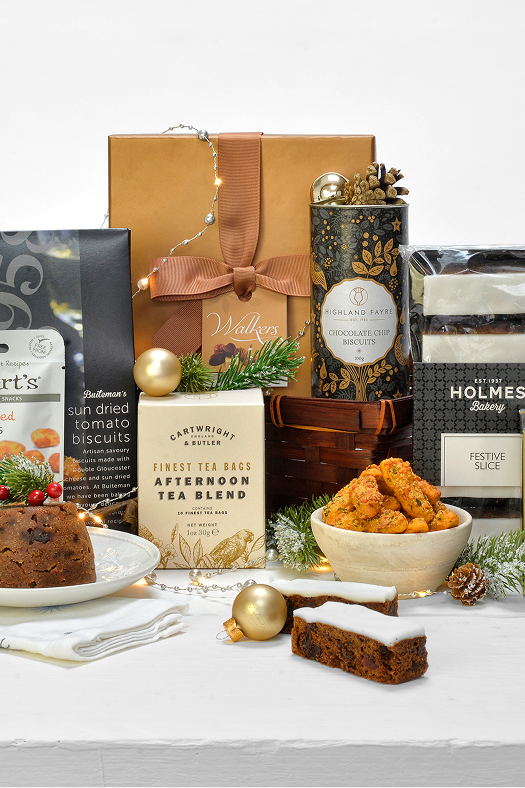
Businesses comparing corporate hampers from Highland Fayre or another supplier can include packaging in the same discussion as contents and delivery. That allows the buyer to weigh the complete gift rather than select food first and treat the container as an afterthought. Any environmental claim should relate to the chosen product or documented company practice, with its limits made clear.
Recyclable also needs context. Local collection arrangements can vary, and an item may need separating from another material before it can be handled appropriately. Clear instructions are more useful to the recipient than a symbol that leaves them guessing which part of the parcel it describes.
A reusable basket needs somewhere to go
A sturdy basket can be welcome when somebody has a use for it. It might hold craft materials, household supplies or picnic items. It can be less practical in a small home where the recipient already has several similar containers. Reuse is a possibility, not a guaranteed outcome of buying a particular style.
For an individual gift, knowledge of the recipient can guide the choice. For a large staff order, it is harder to know how each container will be used. A compact option may be worth comparing if it protects the contents and is easier for people to carry home or store.
Avoid adding instructions that turn the gift into a project. People should not need special tools or a lengthy dismantling exercise to deal with an empty box. If the packaging has a genuine second use, make it easy to understand and leave the choice with them.
The food can be wasted too
Packaging is only part of the purchase. Contents that nobody wants, quantities too large for the household or food delivered before someone goes away can all undermine a carefully selected gift. Matching the selection to the recipient reduces those avoidable problems.
Check dietary requirements and storage needs before ordering. For a shared office hamper, establish who will open it and whether the contents can be used before the building closes. For individual deliveries, choose a date when the recipient can receive and store the parcel appropriately.
Product substitutions also deserve attention. If a supplier needs to replace an item, find out how the change will be communicated and whether dietary suitability could be affected. A substitution that looks similar may have different ingredients or storage requirements. The buyer needs enough information to keep the selection appropriate.
Make the review proportionate to the order
A company does not need a complex scoring system for a handful of gifts. A short written comparison of contents, packaging materials, delivery arrangements and total cost may be enough. For a larger order, getting those details in writing makes it easier for purchasing and communications teams to describe the decision accurately.
Keep the claims modest. A recyclable carton does not prove that the whole gift has no environmental impact, and a reusable container does not establish that every recipient will reuse it. State what can be supported and avoid turning one packaging attribute into a promise about the entire order.
When the gifts have been distributed, ask what happened to the containers. Staff feedback may reveal that a handle was useful, a lining was hard to remove or a box was larger than necessary. Those observations can guide the next purchase more effectively than judging the hamper only by how it looked before opening.